
What is the “EE” anyways?
Written by: Sophia Weiner
Writing 4,000 words about anything is hard. Honestly, even writing a single page about anything is hard – and in double-spacing, a page barely cracks 250 words. Between what feels like a hundred internal assessments (papers for each class graded by the International Baccalaureate program and the school) and mock-exam practice that seems to last a billion hours, finding the time and energy to fit in the extended essay (EE) is no easy feat.
The extended essay is essentially a deep dive into the student’s topic of choice. It can be anything from a full lab study on bacterial growth in varying pH levels to an exploration of the art of songwriting. An IB student can write about whatever they want – as long as it fits within the curriculum, which is likely, considering the extensive range of materials offered.
While the process is straightforward, it’s definitely layered. First, students start by choosing a topic and an advisor, which can be anything or anyone certified by IB. This is followed by meetings and drafting. Finally, once the first draft is finished, the feedback and revisions begin. Spanning roughly a year, the final thesis is typically completed in January of the DP2 year.
But most importantly, the tips:
Start on time. Don’t wait until the deadlines are breathing down your neck.
Ask for help. Advice isn’t bad – honestly, it’s a gift.
Pick a topic you actually enjoy writing about. You’ll be living with it for a long time.
The EE is one of the most unique aspects of the IB Diploma Program. It prepares students for the future and allows them to explore a genuine passion. It’s a pre-college experience that shapes a student’s writing, analytical, and research abilities for years to come.
4,000 words are hard, but they’re doable – and more than that, they become 4,000 lessons, skills, and insights that stay with you long after hiting “submit.”
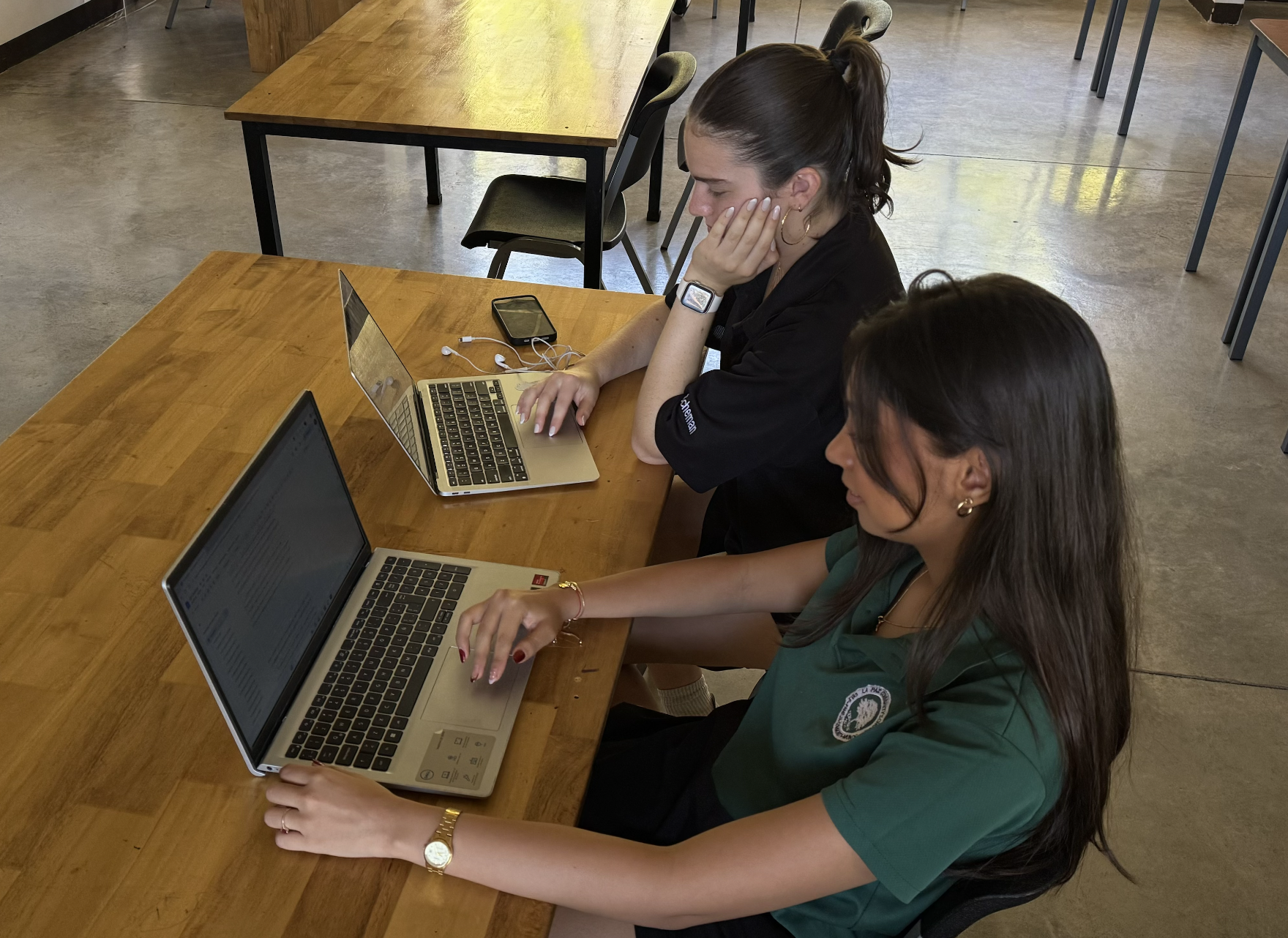
DP2 students working on EE finishing touches
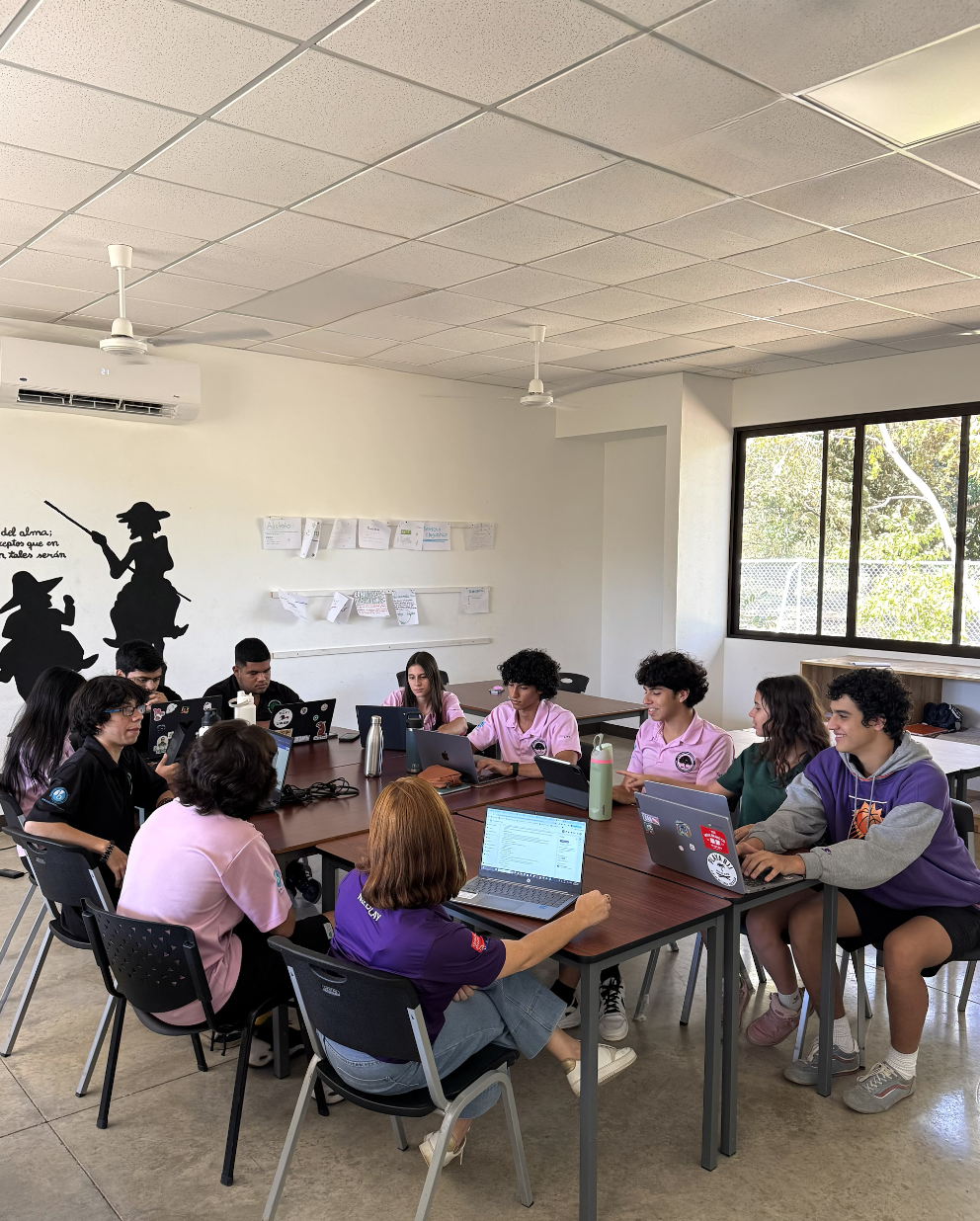
Ms. Ida, Spanish teacher and advisor, guiding DP1 students.
¿Qué es el “EE”, de todos modos?
Escrito por: Sophia Weiner
Escribir 4,000 palabras sobre cualquier tema es difícil. Honestamente, incluso escribir una sola página sobre cualquier cosa es difícil – y con interlineado doble, una página apenas llega a las 250 palabras. Entre lo que se siente como cien evaluaciones internas (trabajos de cada clase calificados por el Programa del Bachillerato Internacional y el colegio) y la práctica de exámenes simulados que parece durar mil millones de horas, encontrar el tiempo y la energía para incluir la monografía (EE) no es nada fácil.
La monografía es, esencialmente, una inmersión profunda en el tema que el estudiante elige. Puede ser cualquier cosa, desde un estudio completo de laboratorio sobre el crecimiento bacteriano en distintos niveles de pH hasta una exploración del arte de escribir canciones. Un estudiante del IB puede escribir sobre lo que quiera – siempre y cuando encaje dentro del currículo, lo cual es muy probable considerando la amplia variedad de materiales que se ofrecen.
Aunque el proceso es sencillo, definitivamente tiene varias capas. Comienza con la elección de un tema y un asesor, que puede ser cualquier tema o cualquier persona certificada por el IB. Luego vienen las reuniones y la redacción de borradores. Finalmente, una vez que el primer borrador está terminado, comienzan la retroalimentación y las revisiones. A lo largo de aproximadamente un año, la tesis final suele completarse en enero del año DP2.
Pero lo más importante, los consejos:
Empieza a tiempo. No esperes a que las fechas límite te estén respirando en la nuca.
Pide ayuda. La curiosidad no es algo malo — honestamente, es un regalo.
Elige un tema que realmente disfrutes escribir. Vas a vivir con él durante mucho tiempo.
La monografía es uno de los aspectos más únicos del Programa del Diploma del IB. Prepara a los estudiantes para el futuro y les permite explorar una pasión genuina. Es una experiencia preuniversitaria que moldea las habilidades de escritura, análisis e investigación de los estudiantes durante muchos años.
4,000 palabras son difíciles, pero son posibles – y más que eso, se convierten en 4,000 lecciones, habilidades y aprendizajes que se quedan contigo mucho después de presionar “submit”.